IN RI is a Latin abbreviation often found on crucifixes. It stands for Iesus Nazarenus, Rex Iudaeorum, which translates to “Jesus of Nazareth, King of the Jews.” According to the New Testament, this phrase was written on the sign placed above Jesus during the crucifixion, identifying the charge against him. Over time, “INRI” has become a traditional symbol on Christian crosses, serving as a reminder of the historical event and the belief in Jesus’ identity and kingship.
.jpg)
In Christian art, Mary shown within an oval shape—often called a mandorla or aureole—symbolizes her holiness and the heavenly realm surrounding her. This radiant, almond-shaped form represents divine light and sets her apart as a sacred figure chosen by God. The oval emphasizes Mary’s purity, spiritual significance, and connection to the divine mystery, especially in scenes such as the Assumption or the Immaculate Conception. It visually expresses that she stands at the meeting point between heaven and earth, enveloped in God’s grace.
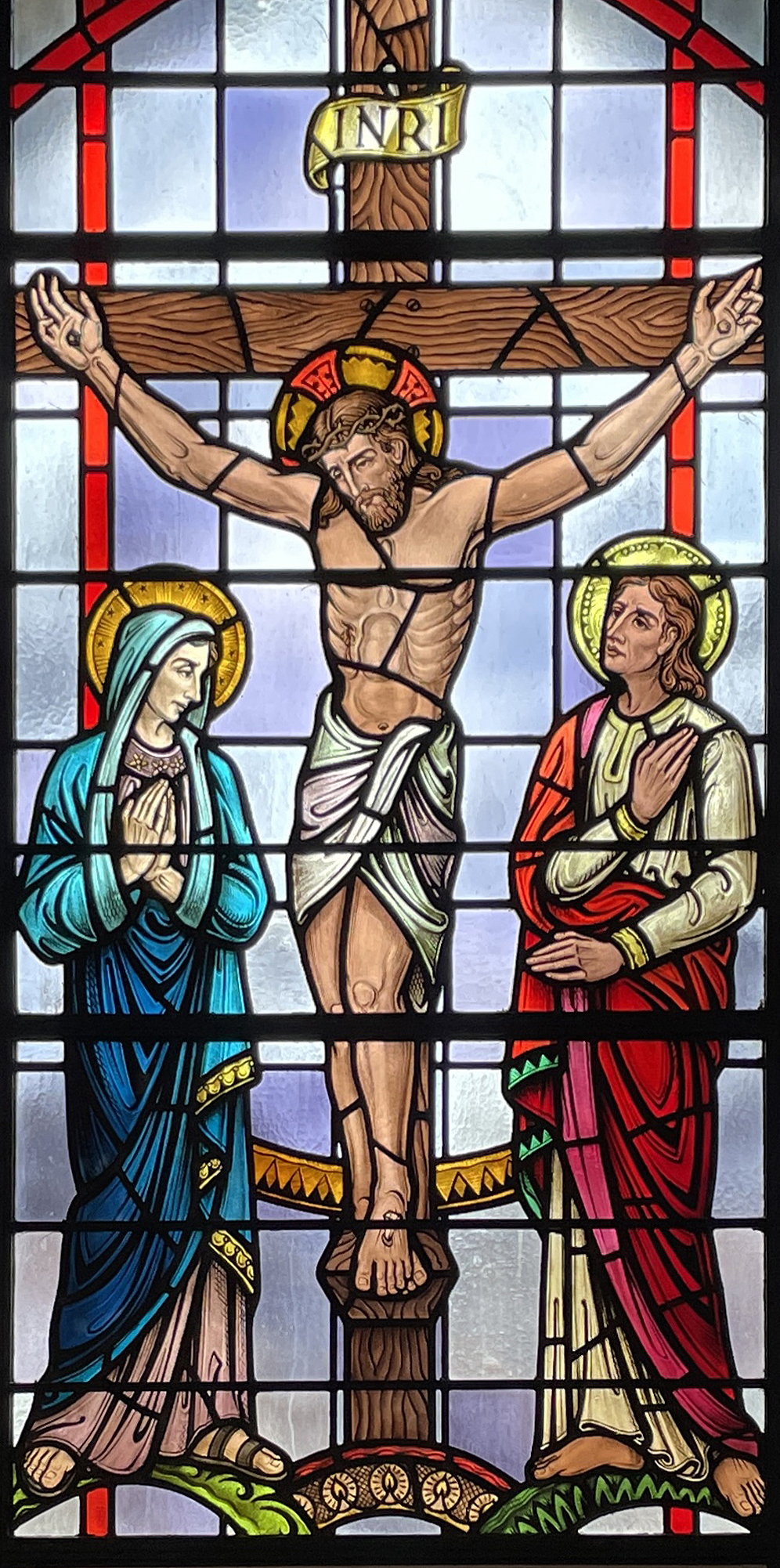
On many traditional crucifix scenes, the two figures standing on either side of Jesus are usually the Virgin Mary and the Apostle John. Mary, his mother, is typically shown on Jesus’ left side, symbolizing her grief and maternal devotion. John, often depicted on the right, represents the beloved disciple who stayed with Jesus during the crucifixion. Their presence emphasizes loyalty, compassion, and the human connections surrounding the event, highlighting the emotional depth of the moment in Christian tradition.
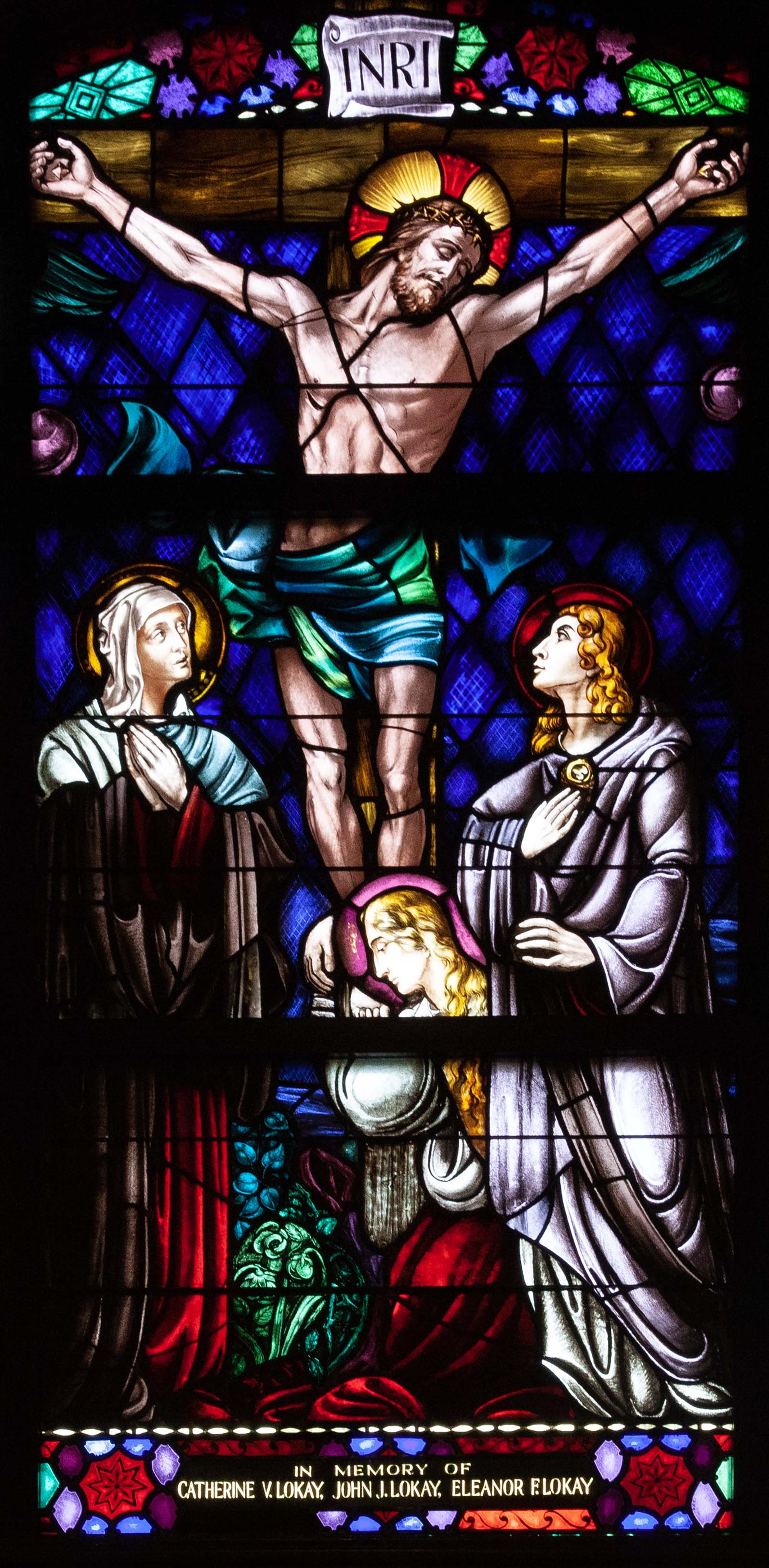
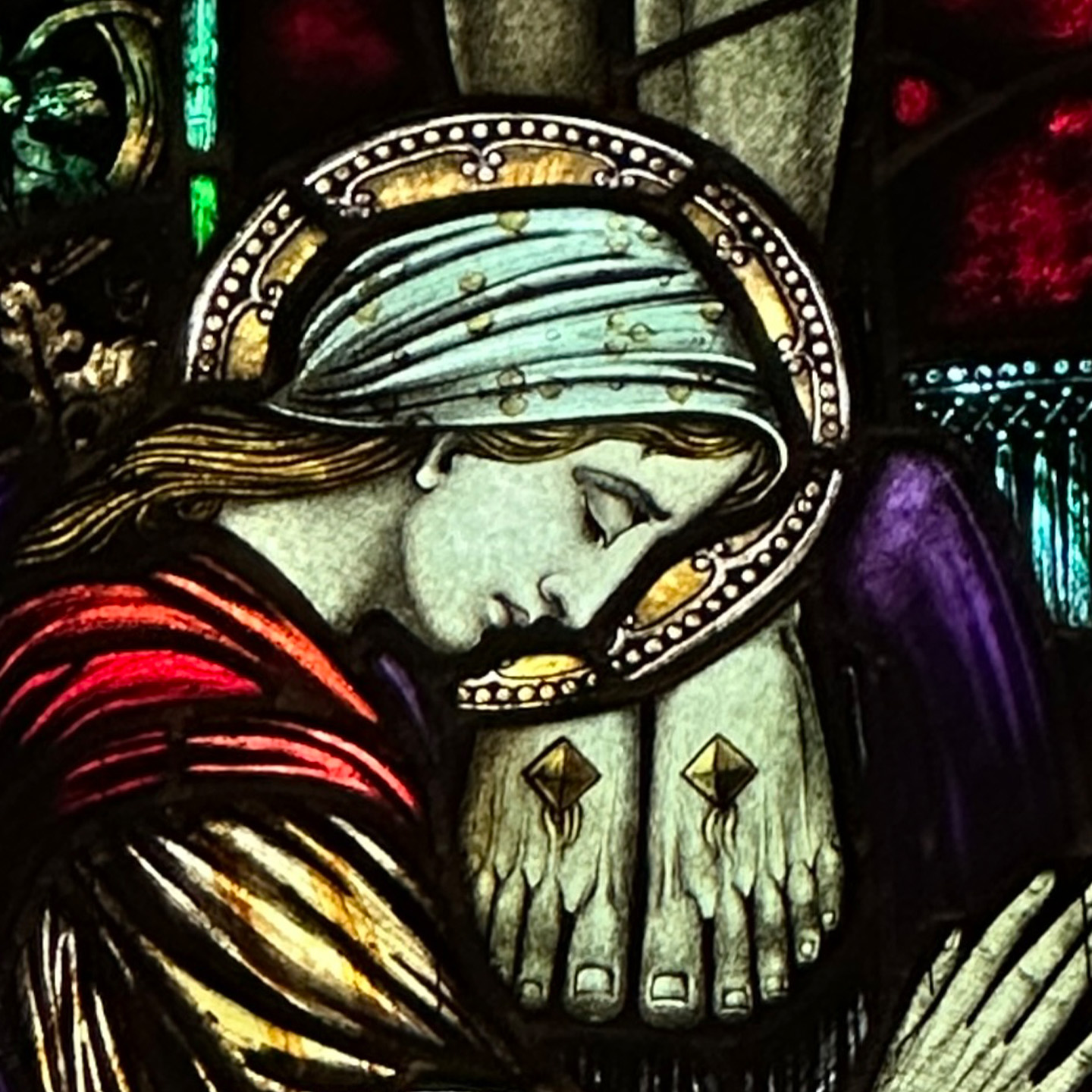
Mary Magdalene is often shown at the foot of the crucifix as a symbol of steadfast devotion and deep compassion. In the Gospel accounts, she remained near Jesus during his suffering, standing close even when many others had fled. Her presence reflects her unwavering loyalty and love, as well as her role as one of Jesus’ most faithful followers. In Christian art, Mary Magdalene at the foot of the cross highlights both the human sorrow of the moment and the strength found in remaining beside someone in their darkest hour.