.jpg)
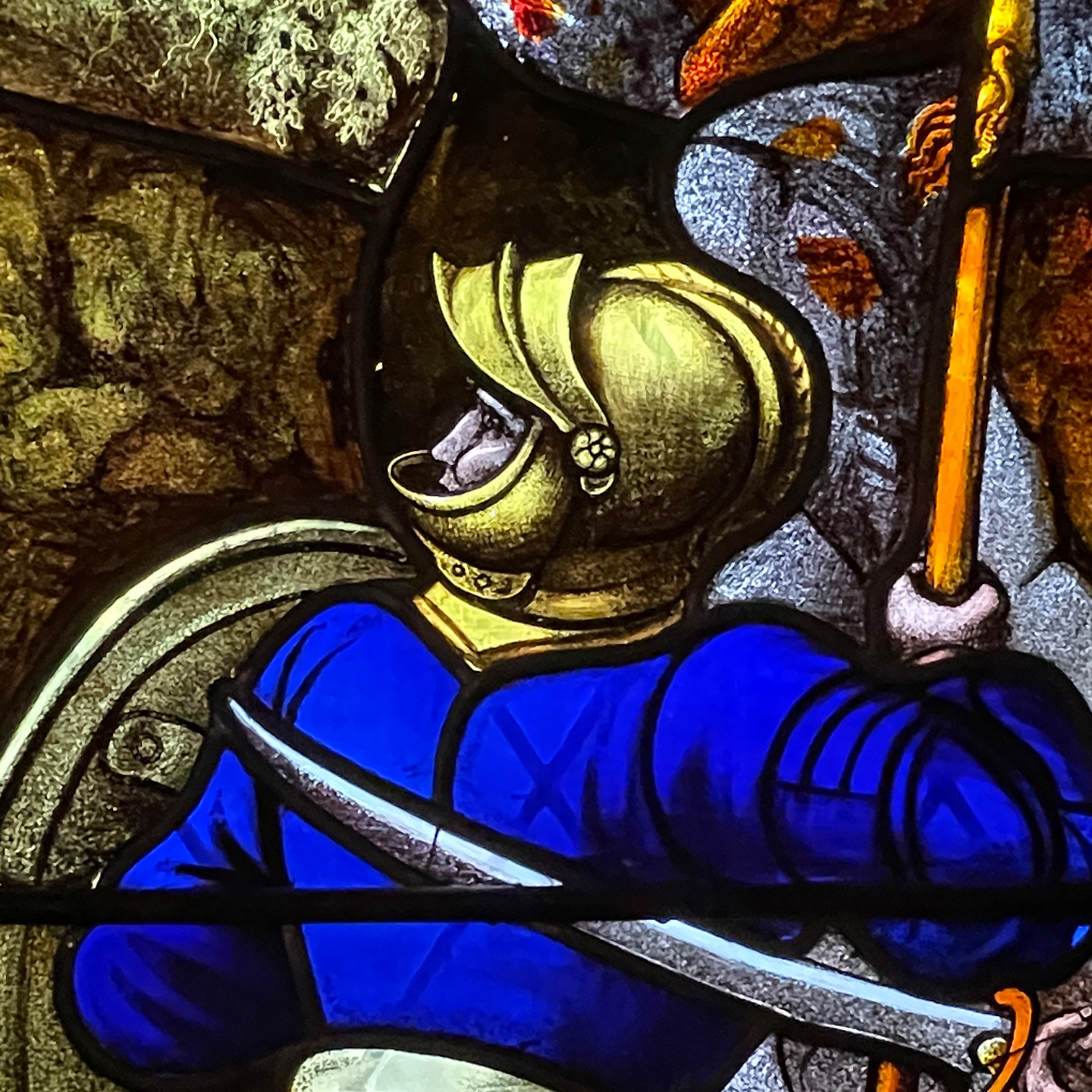
In classical art, the acanthus leaf is a decorative motif that symbolizes life, endurance, and natural beauty. Its elegant, curling form was especially popular in Greek and Roman architecture, most famously appearing on Corinthian column capitals. Artists valued the acanthus for its ability to bring a sense of movement and refinement to their designs. Over time, it became one of the most recognizable patterns in Western art, representing both artistic skill and the connection between nature and human creativity.
.jpg)
A white lily crossed with a sword is a powerful Christian symbol that brings together purity and sorrow, most often associated with the Virgin Mary. The white lily represents her innocence, holiness, and unwavering obedience to God, while the sword refers to Simeon’s prophecy that a “sword” would pierce her heart—foretelling the deep suffering she would endure at the Passion of Christ. When shown together, the lily and sword express both the beauty of Mary’s grace and the profound pain of her maternal sacrifice. This combined symbol serves as a reminder of her purity, strength, and compassionate presence in the midst of suffering.
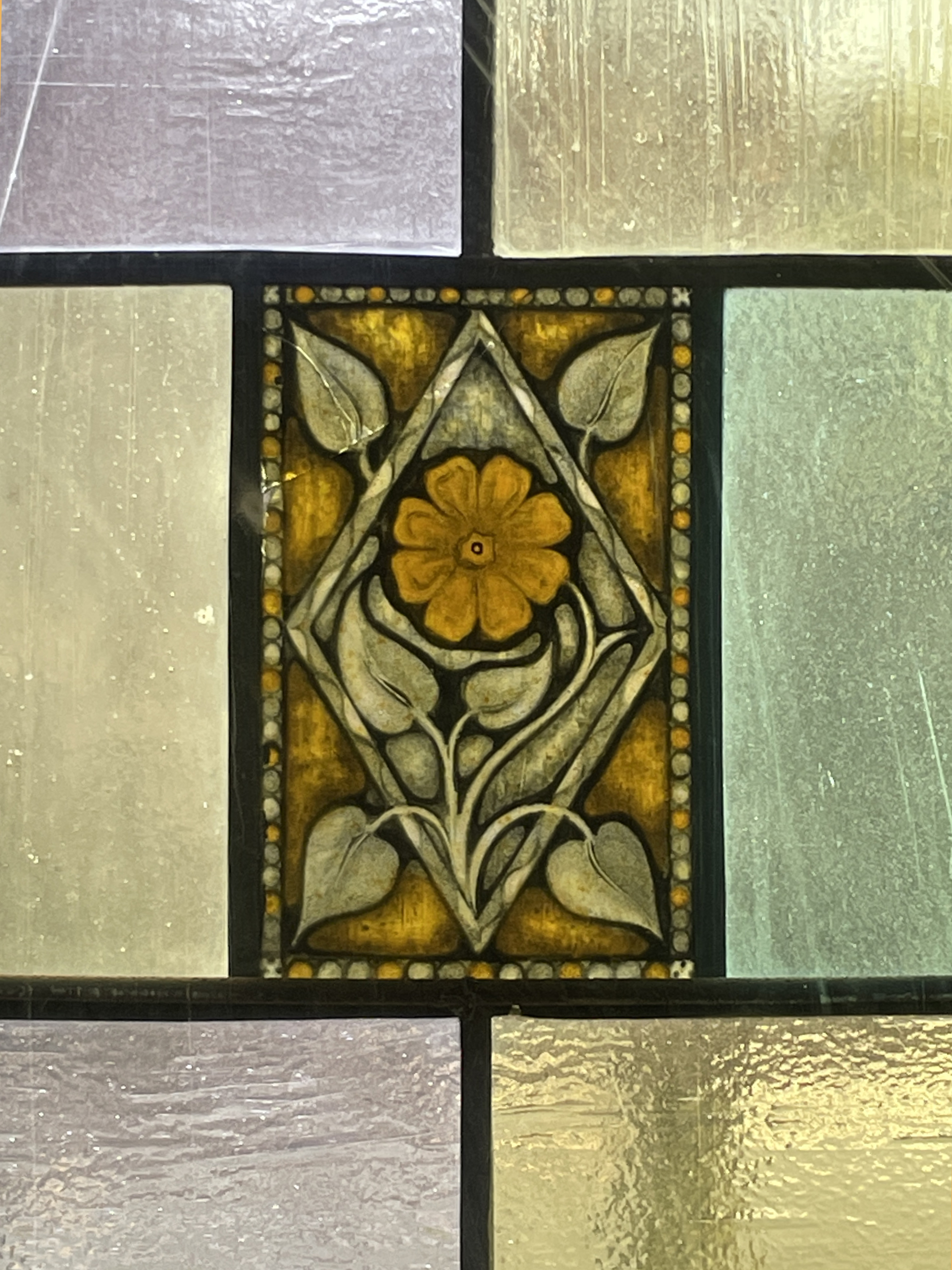
In religious symbolism, the pansy is often associated with thoughtfulness, reflection, and remembrance, drawing from its name’s link to the French pensée (“thought”). In Christian art, the pansy can represent the mind’s turning toward God, encouraging meditation on divine truths. Its three prominent petals were sometimes interpreted as a quiet symbol of the Holy Trinity, and its humble size made it a reminder of spiritual simplicity and humility. Because it blossoms even in cooler seasons, the pansy also came to suggest perseverance in faith, offering a gentle visual cue to keep one’s thoughts centered on God even during difficult times.
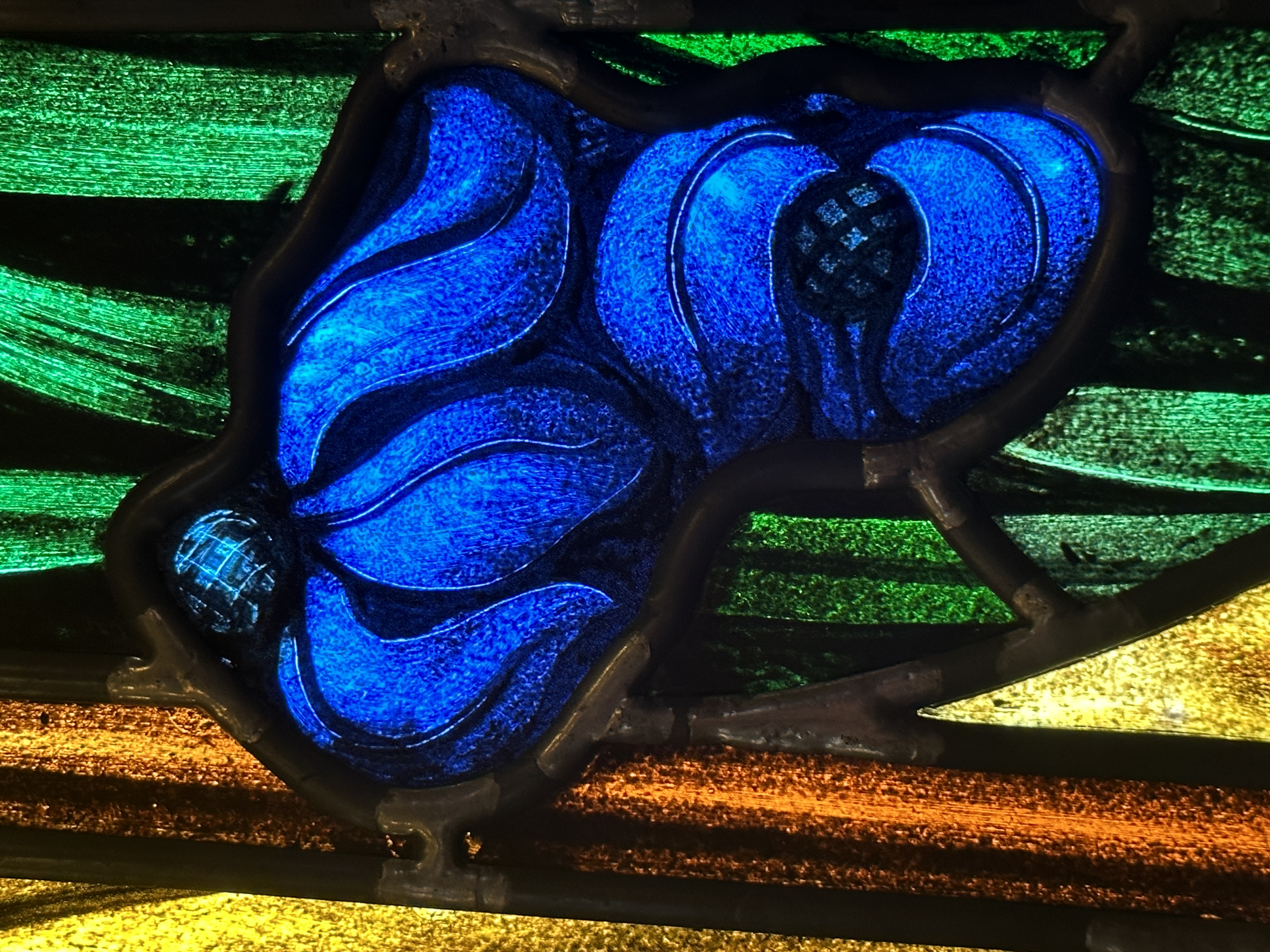
In Catholic tradition, the blue iris is often associated with the Virgin Mary, drawing meaning from both its color and its form. The blue hue reflects Mary’s purity, fidelity, and heavenly grace, while the sword-like shape of the iris petals connects it to the prophecy of Simeon, who foretold that a “sword” would pierce Mary’s heart—symbolizing her sorrows. For this reason, the iris is sometimes seen as a companion symbol to the lily, evoking both beauty and suffering. In church art and stained glass, the blue iris serves as a gentle reminder of Mary’s steadfast faith and her compassionate presence in times of hardship.
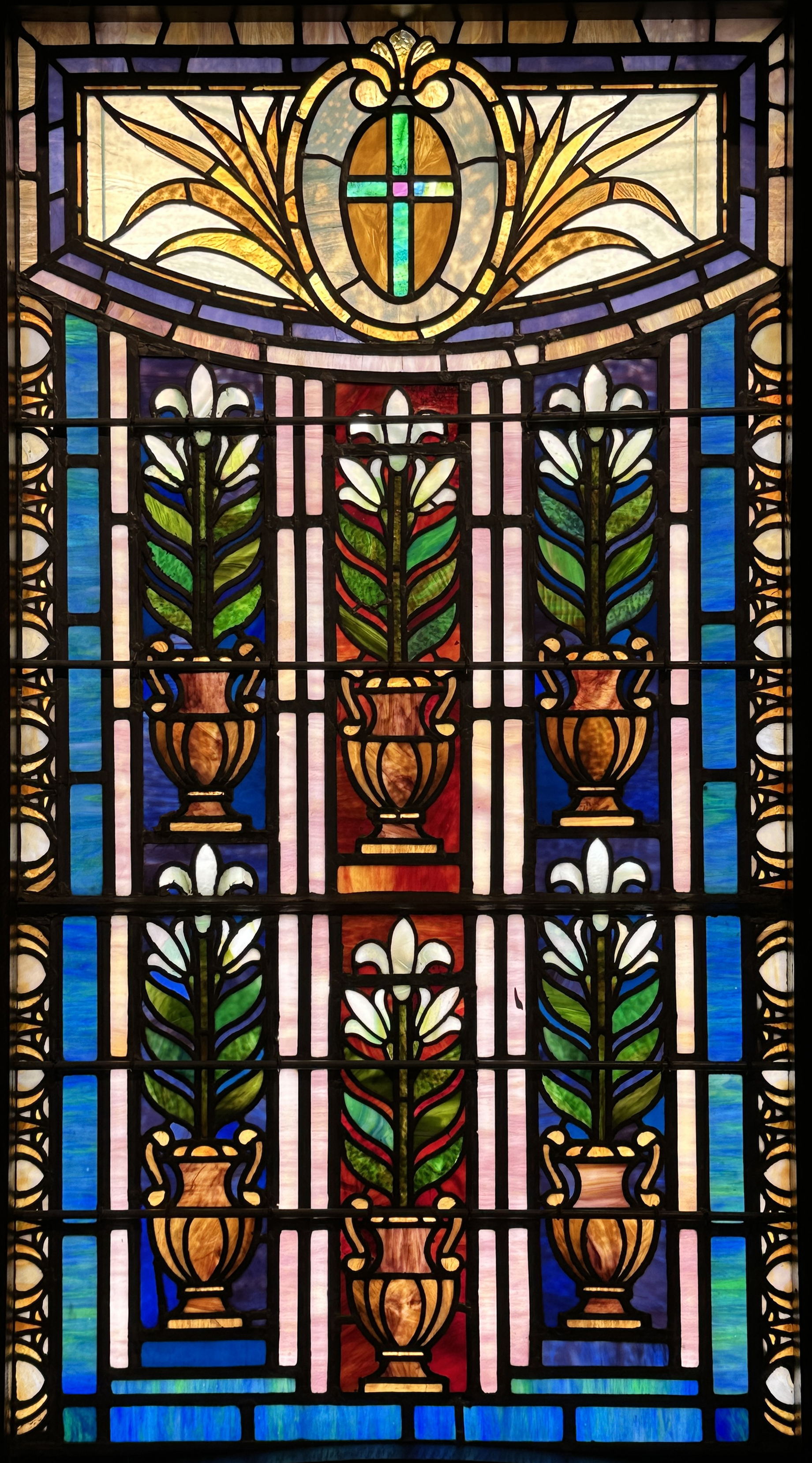
In church stained glass, the formal quality of six lily plants is defined by balance, repetition, and clarity of line. Arranged symmetrically, the lilies create a sense of order and calm that supports the sacred setting, with each plant echoing the others in shape and proportion. The tall, slender stems guide the eye upward, reinforcing vertical movement and spiritual aspiration, while the repeated blossoms establish visual rhythm across the panel. Simplified outlines and controlled curves allow light to pass cleanly through the glass, emphasizing purity of form rather than naturalistic detail. Together, the six lilies function as a unified decorative structure, combining harmony and restraint with symbolic elegance.