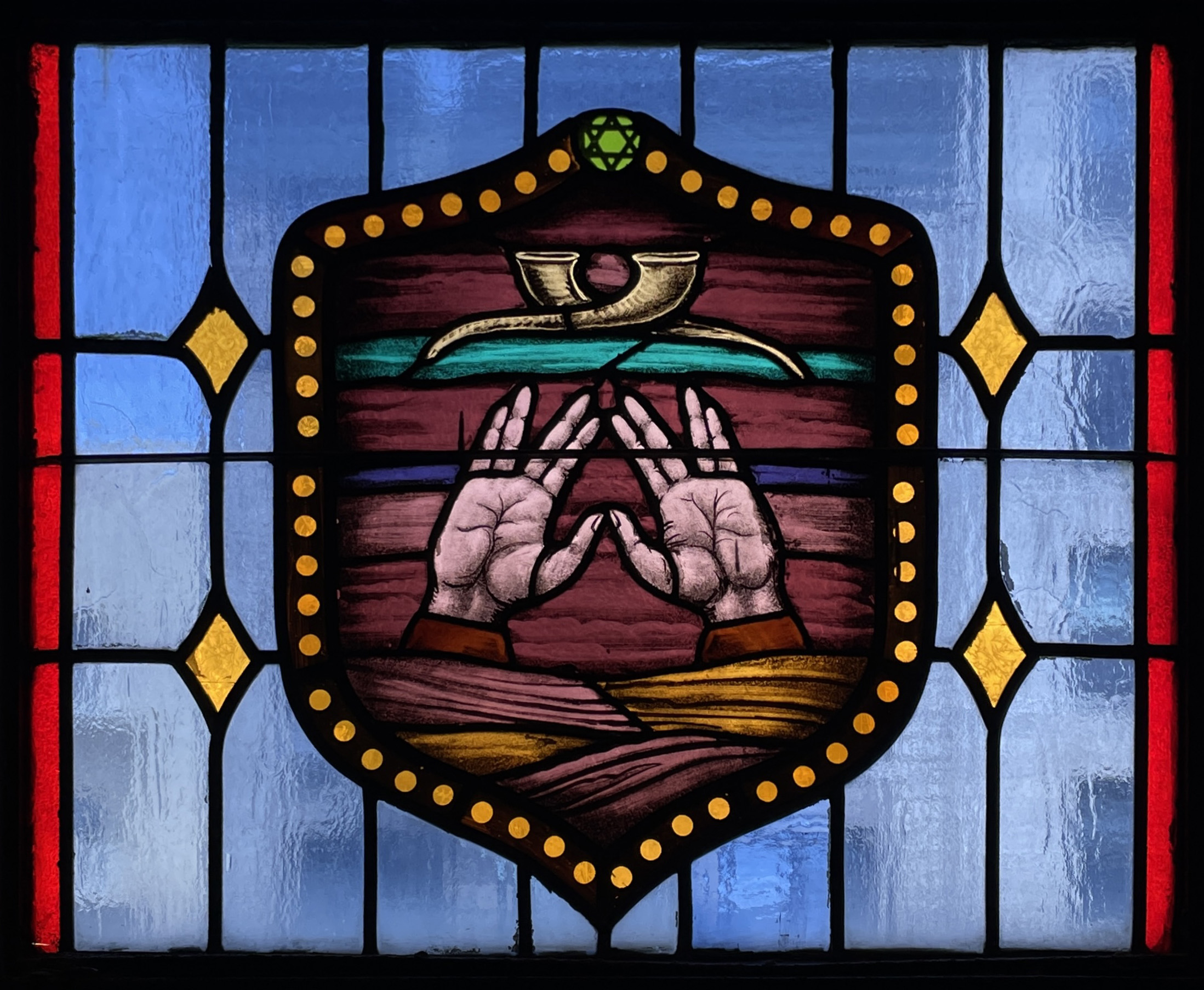
In Judaica, the raised hands with split fingers are associated with the Kohanim (priests) giving the Priestly Blessing, forming the shape of the Hebrew letter Shin. This letter represents one of the names of God and symbolizes the Shekhinah, God’s divine presence. The gesture signifies blessing, protection, and a direct channel of spiritual connection between God and the people.
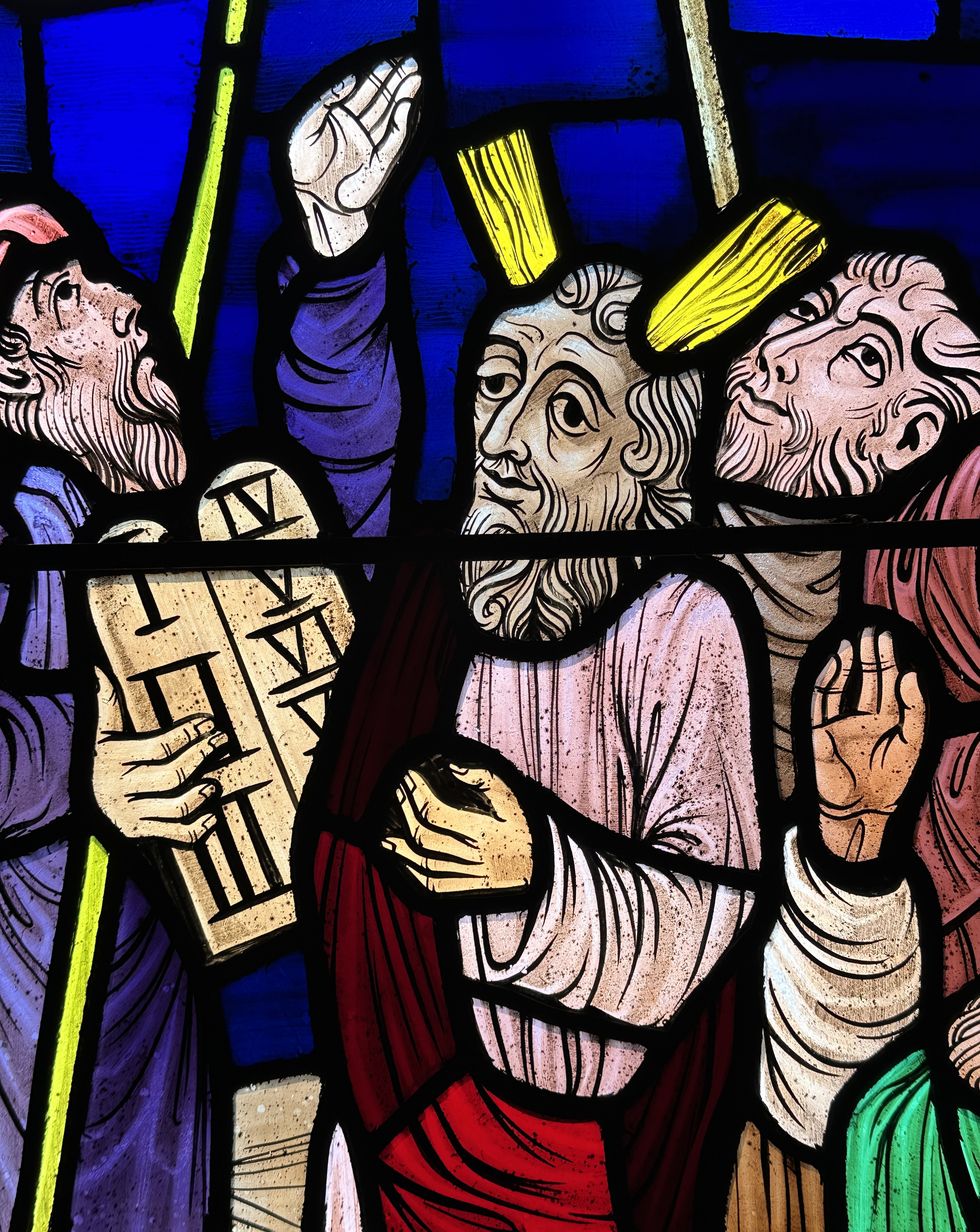
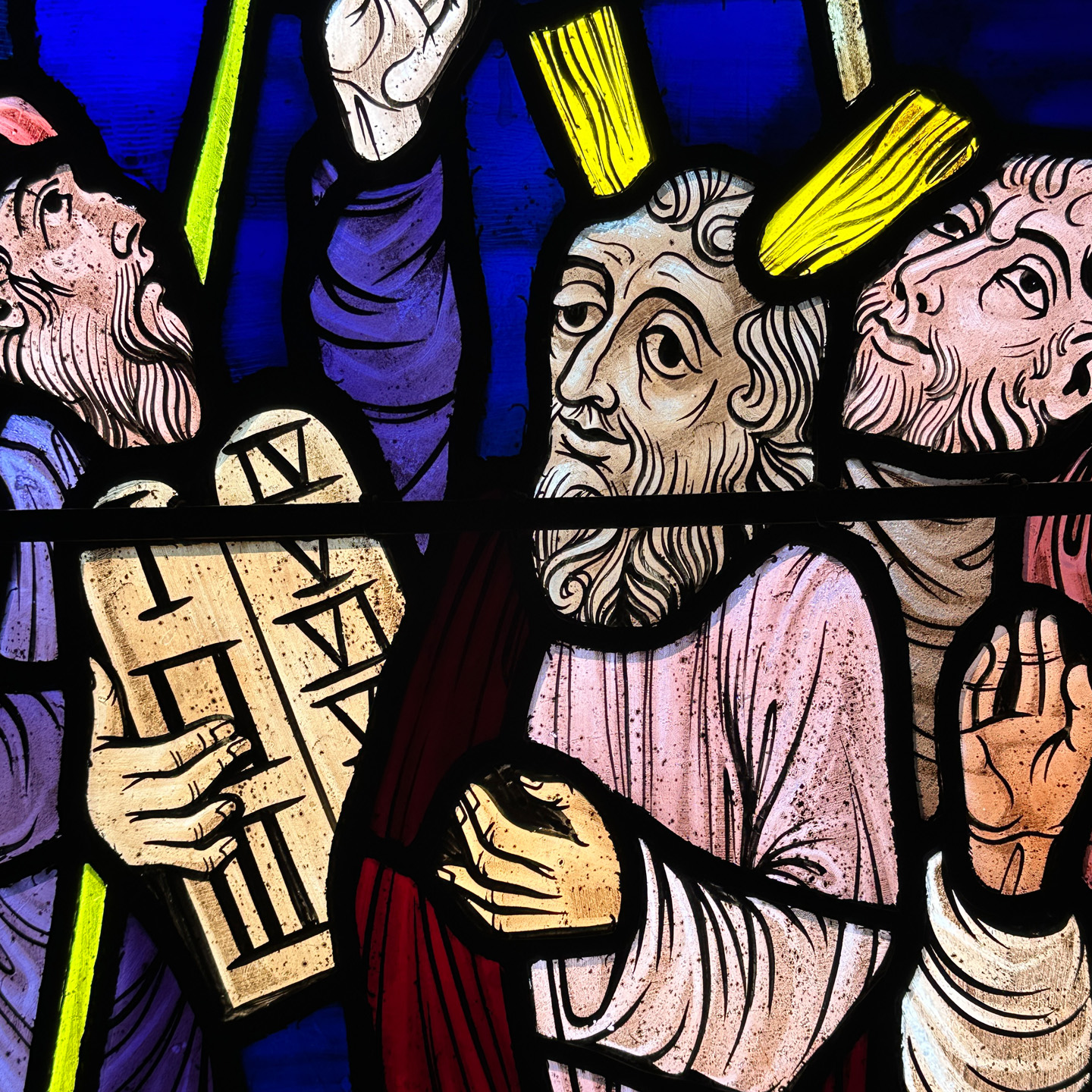
In many artworks, Moses is depicted with horns because of a translation issue in the Latin Vulgate Bible, where the Hebrew word karan (meaning “radiant” or “shining”) was translated as “horned.” As a result, medieval and Renaissance artists portrayed Moses with horns to symbolize the divine radiance he gained after encountering God on Mount Sinai. Rather than implying anything negative, the horns were meant to represent holiness, authority, and closeness to God.
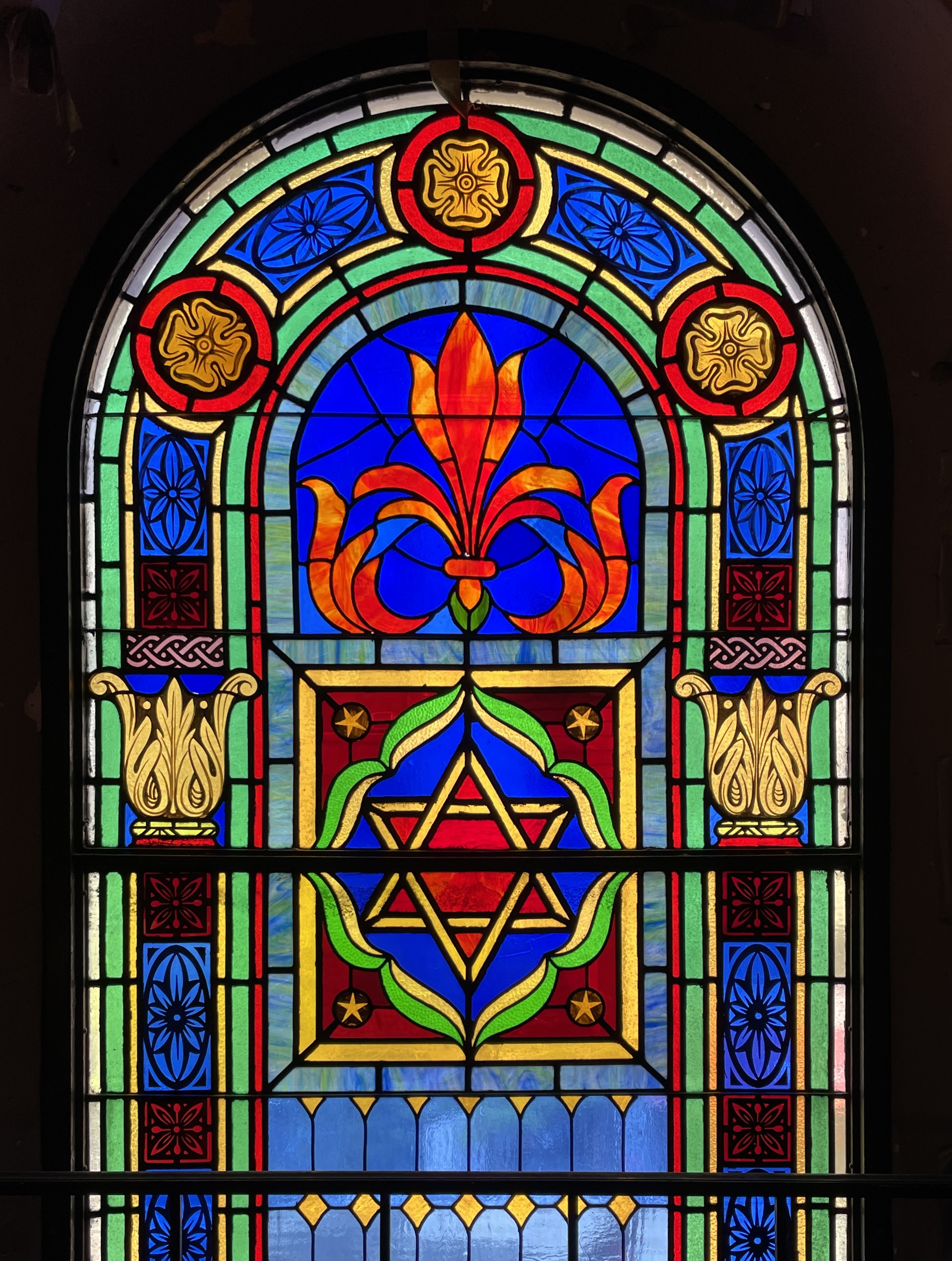
The Star of David is a widely recognized symbol of Judaism and Jewish identity. Formed by two overlapping triangles, it is often understood to represent the connection between God and humanity, as well as the balance between spiritual and earthly realms.
.JPG)
The story of Christ preaching in the Temple tells of Jesus speaking with teachers and elders, demonstrating deep understanding and wisdom even at a young age. He challenges traditional interpretations of the law while emphasizing faith, humility, and love of God. The event reveals his spiritual authority and foreshadows his role as a teacher and religious leader.